

超神火柴人男孩
51.23M · 2026-03-22

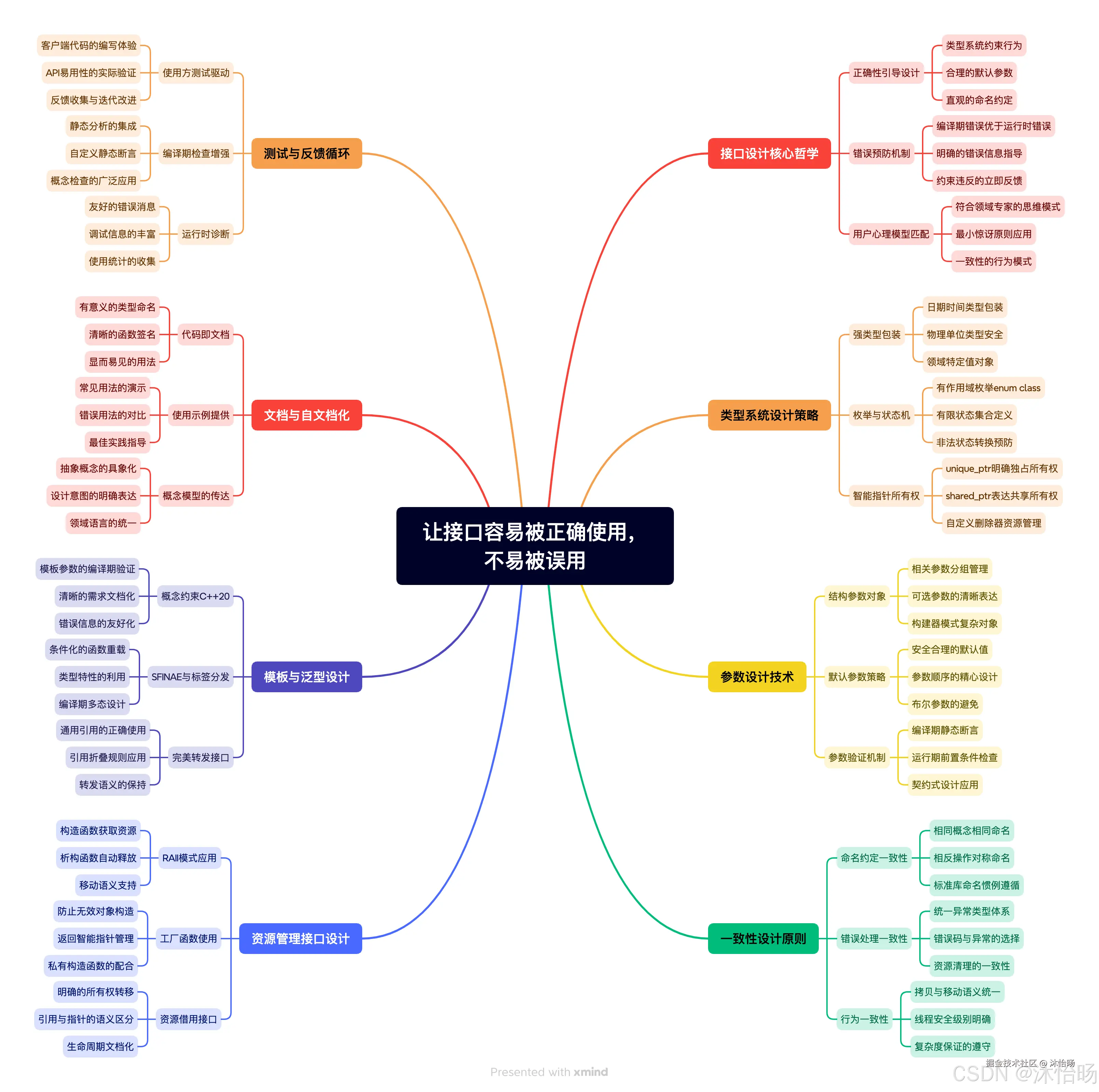
这个条款揭示了优秀软件设计的核心哲学:优秀的接口应该引导用户走向正确用法,同时让错误用法在编译期或运行期难以发生。这是构建可维护、可扩展软件系统的基石。
最终建议: 将接口设计视为与用户对话的艺术。培养"用户思维"——在设计每个接口时都站在用户角度思考:"这个接口容易正确使用吗?可能被怎样误用?如何让错误用法在编译期就被捕获?" 这种用户中心的思考方式是构建优秀软件生态的关键。
记住:在C++接口设计中,让正确用法变得容易和让错误用法变得困难同等重要。 条款18教会我们的不仅是一组技术方案,更是软件设计哲学的具体体现。
典型的易误用接口设计:
// 糟糕的日期接口 - 容易被误用
class BadDate {
public:
    // 参数顺序容易混淆!
    BadDate(int month, int day, int year) {
        // 没有验证:month可以是13,day可以是32!
        month_ = month;
        day_ = day;
        year_ = year;
    }

    // 更多容易误用的方法...

private:
    int month_, day_, year_;
};

void demonstrate_bad_interface() {
    // 所有这些都能编译,但都是错误的!
    BadDate date1(2, 31, 2023);    // 2月有31天?
    BadDate date2(13, 1, 2023);    // 第13月?
    BadDate date3(6, 31, 2023);    // 6月只有30天!
    BadDate date4(2, 29, 2023);    // 2023不是闰年!

    // 更糟的是:参数顺序容易混淆!
    BadDate date5(12, 6, 2023);    // 12月6日还是6月12日?
}
资源管理的易误用接口:
// 容易误用的资源管理接口
class Investment {
public:
    static Investment* create();  // 工厂方法

    // 但用户可能忘记delete!
};

void demonstrate_resource_misuse() {
    Investment* inv = Investment::create();

    // 使用投资对象...

    // 很容易忘记这个!
    // delete inv;  // 内存泄漏!

    // 或者更糟:
    // delete inv;
    // ... 更多代码 ...
    // delete inv;  // 双重删除!
}
类型安全的日期接口:
// 优秀的日期接口 - 利用类型系统防止误用
class Month {
public:
    static Month Jan() { return Month(1); }
    static Month Feb() { return Month(2); }
    // ... 其他月份
    static Month Dec() { return Month(12); }

    int getValue() const { return value_; }

private:
    explicit Month(int m) : value_(m) {}  // 禁止隐式转换
    int value_;
};

class Day {
public:
    explicit Day(int d) : value_(d) {
        if (d < 1 || d > 31) {
            throw std::invalid_argument("日期必须在1-31之间");
        }
    }
    int getValue() const { return value_; }

private:
    int value_;
};

class Year {
public:
    explicit Year(int y) : value_(y) {
        if (y < 1900 || y > 2100) {
            throw std::invalid_argument("年份不合理");
        }
    }
    int getValue() const { return value_; }

private:
    int value_;
};

class GoodDate {
public:
    // 现在不会混淆参数顺序!
    GoodDate(const Month& month, const Day& day, const Year& year) {
        // 可以添加更复杂的验证逻辑
        validateDate(month, day, year);

        month_ = month.getValue();
        day_ = day.getValue();
        year_ = year.getValue();
    }

private:
    void validateDate(const Month& month, const Day& day, const Year& year) {
        // 复杂的日期验证逻辑...
        // 比如闰年检查、每月天数检查等
    }

    int month_, day_, year_;
};

void demonstrate_good_interface() {
    // 正确用法 - 清晰且安全
    GoodDate date1(Month::Jan(), Day(15), Year(2023));

    // 错误用法在编译期就被捕获!
    // GoodDate date2(15, Month::Jan(), Year(2023));  // 编译错误!
    // GoodDate date3(Month::Jan(), Day(32), Year(2023));  // 运行时异常!

    // 参数顺序明确,不会混淆!
    GoodDate date4(Month::Dec(), Day(25), Year(2023));  // 明确是12月25日
}
防止单位混淆的类型系统:
// 物理单位类型安全
class Meter {
public:
    explicit Meter(double value) : value_(value) {}
    double getValue() const { return value_; }

private:
    double value_;
};

class Second {
public:
    explicit Second(double value) : value_(value) {}
    double getValue() const { return value_; }

private:
    double value_;
};

class Velocity {
public:
    // 速度 = 距离 / 时间
    Velocity(const Meter& distance, const Second& time)
        : value_(distance.getValue() / time.getValue()) {}

    double getMetersPerSecond() const { return value_; }

private:
    double value_;
};

void demonstrate_physical_units() {
    Meter distance(100.0);     // 100米
    Second time(9.58);         // 9.58秒

    Velocity velocity(distance, time);  // 正确:米/秒
    std::cout << "速度: " << velocity.getMetersPerSecond() << " m/s" << std::endl;

    // 错误用法被阻止!
    // Velocity wrong(distance, distance);  // 编译错误:Second预期但提供Meter
    // Velocity wrong2(time, distance);     // 编译错误:参数顺序错误
}
安全的资源创建接口:
#include <memory>

class SafeInvestment {
public:
    virtual ~SafeInvestment() = default;
    virtual void calculate() = 0;

    // 工厂函数返回智能指针 - 用户不会忘记删除!
    static std::unique_ptr<SafeInvestment> create() {
        return std::make_unique<Stock>();
    }

    // 带参数的工厂函数
    static std::shared_ptr<SafeInvestment> createShared(const std::string& type) {
        if (type == "stock") return std::make_shared<Stock>();
        if (type == "bond") return std::make_shared<Bond>();
        throw std::invalid_argument("未知的投资类型: " + type);
    }

protected:
    SafeInvestment() = default;  // 防止直接实例化

private:
    // 禁止拷贝
    SafeInvestment(const SafeInvestment&) = delete;
    SafeInvestment& operator=(const SafeInvestment&) = delete;
};

class Stock : public SafeInvestment {
public:
    void calculate() override {
        std::cout << "计算股票收益" << std::endl;
    }
};

class Bond : public SafeInvestment {
public:
    void calculate() override {
        std::cout << "计算债券收益" << std::endl;
    }
};

void demonstrate_safe_factory() {
    // 用户不可能忘记删除!
    auto investment1 = SafeInvestment::create();
    investment1->calculate();

    auto investment2 = SafeInvestment::createShared("stock");
    investment2->calculate();

    // 自动内存管理,没有泄漏风险!
}
复杂对象的渐进式安全构建:
#include <memory>
#include <string>

class DatabaseConfig {
public:
    class Builder;  // 前向声明

    // 只能通过Builder创建
    static Builder create() { return Builder(); }

    // 访问方法
    const std::string& getHost() const { return host_; }
    int getPort() const { return port_; }
    const std::string& getUsername() const { return username_; }
    int getTimeout() const { return timeout_; }

private:
    DatabaseConfig() = default;  // 只有Builder可以构造

    std::string host_;
    int port_ = 3306;           // 合理的默认值
    std::string username_;
    std::string password_;
    int timeout_ = 30;          // 合理的默认值

    // Builder是友元
    friend class Builder;
};

class DatabaseConfig::Builder {
public:
    // 流畅接口 - 方法返回Builder&
    Builder& setHost(const std::string& host) {
        config_.host_ = host;
        return *this;
    }

    Builder& setPort(int port) {
        if (port <= 0 || port > 65535) {
            throw std::invalid_argument("端口必须在1-65535之间");
        }
        config_.port_ = port;
        return *this;
    }

    Builder& setCredentials(const std::string& username, const std::string& password) {
        if (username.empty()) {
            throw std::invalid_argument("用户名不能为空");
        }
        config_.username_ = username;
        config_.password_ = password;
        return *this;
    }

    Builder& setTimeout(int timeout) {
        if (timeout <= 0) {
            throw std::invalid_argument("超时必须为正数");
        }
        config_.timeout_ = timeout;
        return *this;
    }

    // 构建最终对象
    DatabaseConfig build() {
        // 验证必填字段
        if (config_.host_.empty()) {
            throw std::logic_error("必须设置主机地址");
        }
        if (config_.username_.empty()) {
            throw std::logic_error("必须设置用户名");
        }

        return std::move(config_);  // 移动构造
    }

private:
    DatabaseConfig config_;
};

void demonstrate_builder_pattern() {
    try {
        // 流畅接口 - 易于正确使用
        auto config = DatabaseConfig::create()
            .setHost("localhost")
            .setPort(3306)
            .setCredentials("admin", "secret")
            .setTimeout(60)
            .build();

        std::cout << "数据库配置: " << config.getHost()
                  << ":" << config.getPort() << std::endl;

        // 错误用法被阻止!
        // auto badConfig = DatabaseConfig::create().build();  // 异常:缺少必填字段
        // auto badConfig2 = DatabaseConfig::create().setPort(0);  // 异常:无效端口

    } catch (const std::exception& e) {
        std::cout << "配置错误: " << e.what() << std::endl;
    }
}
一致的接口命名:
class ConsistentNaming {
public:
    // 好的命名 - 清晰一致
    void openFile(const std::string& filename);
    void closeFile();

    void startTransaction();
    void commitTransaction();
    void rollbackTransaction();

    void connectToDatabase();
    void disconnectFromDatabase();

    // 对称的操作对
    void lock();
    void unlock();

    void beginRead();
    void endRead();

    // 避免的不好命名
    // void initiate();       // 不清楚初始化什么
    // void terminate();      // 不清楚终止什么
    // void doStuff();        // 太模糊
};

// STL风格的一致性
class Container {
public:
    using iterator = ...;
    using const_iterator = ...;

    iterator begin();
    iterator end();
    const_iterator begin() const;
    const_iterator end() const;

    size_t size() const;
    bool empty() const;

    // 符合STL约定,用户知道怎么用
};
统一的异常体系:
#include <stdexcept>

// 自定义异常层次结构
class DatabaseException : public std::runtime_error {
public:
    using std::runtime_error::runtime_error;
};

class ConnectionException : public DatabaseException {
public:
    using DatabaseException::DatabaseException;
};

class QueryException : public DatabaseException {
public:
    using DatabaseException::DatabaseException;
};

class ConsistentErrorHandling {
public:
    void connect(const std::string& connectionString) {
        if (connectionString.empty()) {
            throw ConnectionException("连接字符串不能为空");
        }
        // 连接逻辑...
    }

    void executeQuery(const std::string& query) {
        if (query.empty()) {
            throw QueryException("查询不能为空");
        }
        if (!isConnected()) {
            throw ConnectionException("未连接到数据库");
        }
        // 执行查询...
    }

    bool isConnected() const { return true; }  // 简化实现
};

void demonstrate_consistent_errors() {
    ConsistentErrorHandling db;

    try {
        db.connect("");  // 抛出ConnectionException
        db.executeQuery("");  // 抛出QueryException

    } catch (const ConnectionException& e) {
        std::cout << "连接错误: " << e.what() << std::endl;
    } catch (const QueryException& e) {
        std::cout << "查询错误: " << e.what() << std::endl;
    } catch (const DatabaseException& e) {
        std::cout << "数据库错误: " << e.what() << std::endl;
    }
    // 用户知道会抛出什么异常,可以适当处理
}
编译期接口约束:
#include <concepts>
#include <type_traits>

// C++20概念 - 编译期接口约束
template<typename T>
concept Arithmetic = std::is_arithmetic_v<T>;

template<typename T>
concept Container = requires(T t) {
    t.begin();
    t.end();
    t.size();
};

class ModernInterface {
public:
    // 编译期验证的接口
    template<Arithmetic T>
    T calculateAverage(const std::vector<T>& numbers) {
        if (numbers.empty()) {
            throw std::invalid_argument("数字集合不能为空");
        }

        T sum = T();
        for (const auto& num : numbers) {
            sum += num;
        }
        return sum / numbers.size();
    }

    // 容器概念的接口
    template<Container C>
    void processContainer(const C& container) {
        std::cout << "处理容器,大小: " << container.size() << std::endl;
        for (const auto& element : container) {
            std::cout << element << " ";
        }
        std::cout << std::endl;
    }
};

void demonstrate_concepts() {
    ModernInterface interface;

    // 正确用法
    std::vector<int> numbers = {1, 2, 3, 4, 5};
    auto avg = interface.calculateAverage(numbers);
    std::cout << "平均值: " << avg << std::endl;

    interface.processContainer(numbers);

    // 错误用法在编译期被捕获!
    // std::vector<std::string> strings = {"a", "b", "c"};
    // interface.calculateAverage(strings);  // 编译错误:不满足Arithmetic概念
}
支持现代C++用法的接口:
#include <tuple>

class CoordinateSystem {
public:
    struct Point {
        double x, y, z;

        // 支持结构化绑定
        template<std::size_t I>
        decltype(auto) get() const {
            if constexpr (I == 0) return x;
            else if constexpr (I == 1) return y;
            else if constexpr (I == 2) return z;
        }
    };

    // 返回多个值 - 支持结构化绑定
    static std::tuple<Point, double, double> calculateTransform(const Point& p) {
        double distance = std::sqrt(p.x*p.x + p.y*p.y + p.z*p.z);
        double angle = std::atan2(p.y, p.x);

        return {p, distance, angle};
    }
};

// 为Point特化std::tuple_size和std::tuple_element
namespace std {
    template<>
    struct tuple_size<CoordinateSystem::Point> : integral_constant<size_t, 3> {};

    template<size_t I>
    struct tuple_element<I, CoordinateSystem::Point> {
        using type = double;
    };
}

void demonstrate_structured_binding() {
    CoordinateSystem::Point point{1.0, 2.0, 3.0};

    // 结构化绑定 - 清晰的接口用法
    auto [transformed, distance, angle] =
        CoordinateSystem::calculateTransform(point);

    std::cout << "变换点: (" << transformed.x << ", " << transformed.y << ", " << transformed.z << ")" << std::endl;
    std::cout << "距离: " << distance << ", 角度: " << angle << std::endl;

    // 也可以直接结构化绑定Point
    auto [x, y, z] = point;
    std::cout << "点坐标: " << x << ", " << y << ", " << z << std::endl;
}
#include <queue>
#include <mutex>
#include <condition_variable>
#include <chrono>

class ThreadSafeQueue {
public:
    using Clock = std::chrono::steady_clock;
    using TimePoint = Clock::time_point;

    // 明确的超时类型
    struct Timeout {
        std::chrono::milliseconds duration;

        explicit Timeout(std::chrono::milliseconds ms) : duration(ms) {}

        TimePoint getDeadline() const {
            return Clock::now() + duration;
        }
    };

    // 无限等待的明确表示
    static constexpr struct InfiniteWaitTag {} InfiniteWait{};

public:
    ThreadSafeQueue() = default;

    // 禁止拷贝(移动语义允许)
    ThreadSafeQueue(const ThreadSafeQueue&) = delete;
    ThreadSafeQueue& operator=(const ThreadSafeQueue&) = delete;

    // 推送消息 - 简单的接口
    void push(const std::string& message) {
        std::lock_guard<std::mutex> lock(mutex_);
        queue_.push(message);
        condition_.notify_one();
    }

    // 弹出消息 - 多个明确选项
    std::string pop() {
        std::unique_lock<std::mutex> lock(mutex_);
        condition_.wait(lock, [this] { return !queue_.empty(); });

        return popImpl(lock);
    }

    std::optional<std::string> tryPop() {
        std::lock_guard<std::mutex> lock(mutex_);
        if (queue_.empty()) {
            return std::nullopt;
        }
        return popImpl(lock);
    }

    std::optional<std::string> popWithTimeout(const Timeout& timeout) {
        std::unique_lock<std::mutex> lock(mutex_);
        bool success = condition_.wait_until(
            lock, timeout.getDeadline(), [this] { return !queue_.empty(); });

        if (!success) {
            return std::nullopt;  // 超时
        }
        return popImpl(lock);
    }

    // 状态查询
    bool empty() const {
        std::lock_guard<std::mutex> lock(mutex_);
        return queue_.empty();
    }

    size_t size() const {
        std::lock_guard<std::mutex> lock(mutex_);
        return queue_.size();
    }

private:
    std::string popImpl(std::unique_lock<std::mutex>& lock) {
        if (!lock.owns_lock() || queue_.empty()) {
            throw std::logic_error("popImpl前提条件不满足");
        }

        std::string message = std::move(queue_.front());
        queue_.pop();
        return message;
    }

    mutable std::mutex mutex_;
    std::condition_variable condition_;
    std::queue<std::string> queue_;
};

void demonstrate_thread_safe_queue() {
    ThreadSafeQueue queue;

    // 清晰的使用方式
    queue.push("Hello");

    // 阻塞弹出
    // std::string msg1 = queue.pop();

    // 非阻塞尝试
    if (auto msg = queue.tryPop()) {
        std::cout << "收到消息: " << *msg << std::endl;
    }

    // 带超时的弹出
    if (auto msg = queue.popWithTimeout(ThreadSafeQueue::Timeout{100ms})) {
        std::cout << "收到消息: " << *msg << std::endl;
    } else {
        std::cout << "弹出超时" << std::endl;
    }

    // 错误用法很难写出来!
    // queue.popWithTimeout(100);  // 编译错误:需要Timeout类型
    // queue.popWithTimeout("100ms");  // 编译错误:需要Timeout类型
}
#include <filesystem>
#include <fstream>
#include <system_error>

namespace fs = std::filesystem;

class SafeFileSystem {
public:
    // 明确的文件打开模式
    enum class OpenMode {
        Read,       // 只读
        Write,      // 只写(覆盖)
        Append,     // 追加
        ReadWrite   // 读写
    };

    // 文件操作结果
    struct OperationResult {
        bool success;
        std::error_code errorCode;
        std::string errorMessage;

        explicit operator bool() const { return success; }
    };

public:
    // 安全的文件打开
    static std::expected<std::fstream, std::string>
    openFile(const fs::path& filePath, OpenMode mode) {
        std::ios_base::openmode openMode = std::ios_base::binary;

        switch (mode) {
            case OpenMode::Read:
                openMode |= std::ios_base::in;
                break;
            case OpenMode::Write:
                openMode |= std::ios_base::out | std::ios_base::trunc;
                break;
            case OpenMode::Append:
                openMode |= std::ios_base::out | std::ios_base::app;
                break;
            case OpenMode::ReadWrite:
                openMode |= std::ios_base::in | std::ios_base::out;
                break;
        }

        std::fstream file(filePath, openMode);
        if (!file.is_open()) {
            return std::unexpected("无法打开文件: " + filePath.string());
        }

        return file;
    }

    // 安全的文件复制
    static OperationResult copyFileSafe(const fs::path& source,
                                       const fs::path& destination,
                                       bool overwrite = false) {
        // 前置条件检查
        if (!fs::exists(source)) {
            return {false, {}, "源文件不存在: " + source.string()};
        }

        if (fs::exists(destination) && !overwrite) {
            return {false, {}, "目标文件已存在: " + destination.string()};
        }

        // 执行操作
        std::error_code ec;
        fs::copy_file(source, destination,
                     overwrite ? fs::copy_options::overwrite_existing
                              : fs::copy_options::none, ec);

        if (ec) {
            return {false, ec, "文件复制失败: " + ec.message()};
        }

        return {true, {}, {}};
    }

    // 安全的目录创建
    static OperationResult createDirectoriesSafe(const fs::path& dirPath) {
        if (fs::exists(dirPath)) {
            if (!fs::is_directory(dirPath)) {
                return {false, {}, "路径已存在但不是目录: " + dirPath.string()};
            }
            return {true, {}, {}};  // 目录已存在,不算错误
        }

        std::error_code ec;
        bool created = fs::create_directories(dirPath, ec);

        if (ec) {
            return {false, ec, "目录创建失败: " + ec.message()};
        }

        return {true, {}, created ? "目录已创建" : "目录已存在"};
    }
};

void demonstrate_safe_filesystem() {
    // 清晰的文件操作
    auto file = SafeFileSystem::openFile("data.txt", SafeFileSystem::OpenMode::Read);
    if (file) {
        std::cout << "文件打开成功" << std::endl;
    } else {
        std::cout << "文件打开失败: " << file.error() << std::endl;
    }

    // 安全的文件复制
    auto result = SafeFileSystem::copyFileSafe("source.txt", "backup.txt", true);
    if (result) {
        std::cout << "文件复制成功" << std::endl;
    } else {
        std::cout << "文件复制失败: " << result.errorMessage << std::endl;
    }

    // 安全的目录创建
    auto dirResult = SafeFileSystem::createDirectoriesSafe("/path/to/new/directory");
    if (dirResult) {
        std::cout << "目录操作成功: " << dirResult.errorMessage << std::endl;
    }

    // 接口引导正确用法,错误用法很难写出来!
}